

If you're a new golfer staring at a wall of clubs in a pro shop, the sheer number of options can stop you in your tracks. A starter golf club set is the fastest way to get on the course without overthinking every purchase. Beginner Golf Etiquette helps new players build confidence from day one, and choosing the right clubs is one of the first steps.
This guide walks you through seven straightforward steps to pick an affordable first set that matches your skill level, your body, and your budget. No jargon, no pressure to overspend.
Quick Guide: How to Choose Your First Golf Club Set in 7 Easy Steps
- Decide Why a Simple Starter Set Makes Sense. Fewer clubs keep your learning curve short and your spending low.
- Set a Realistic Budget Before You Shop. Knowing your spending range prevents impulse purchases and buyer's remorse.
- Pick the Right Club Lineup for a Beginner. Focus on the forgiving clubs that cover the shots you'll actually hit.
- Choose Between Graphite and Steel Shafts. Lighter graphite shafts are often the friendlier starting point for new swings.
- Get the Right Length and Flex. Clubs that fit your height and swing speed help you make solid contact sooner.
- Avoid Common First-Set Buying Mistakes. Checking the bag, included clubs, and skill level keeps you from wasting money.
- Confirm the Set Is Worth Buying Before Checkout. A quick checklist protects you from returns and regret.
How to Pick an Affordable First Golf Club Set as a Beginner
1. Decide Why a Simple Starter Set Makes Sense
A complete starter set bundles the clubs you need into one purchase at one price. You skip the confusion of mixing and matching individual clubs from different brands. For a new golfer, that simplicity makes a big difference.
Most beginners play their first rounds with fewer than half the clubs in their bag. A full custom build of 14 clubs adds weight, cost, and decisions you aren't ready to make yet. Starting simple lets you focus on building a repeatable swing rather than wondering which club to pull.
The goal at this stage is getting comfortable on the course. Once your swing becomes more consistent, you can replace individual clubs over time. Think of a starter set as a solid starting point, not a lifelong commitment.
2. Set a Realistic Budget Before You Shop
Starter sets generally fall into three price lanes. Budget-friendly boxed sets often land between a few hundred dollars and around a thousand. Mid-range builds, where you piece together clubs from different makers, typically run a bit higher. Premium current-generation setups climb significantly from there.
For most new adult golfers, the entry-level lane covers everything you need to play your first season. The clubs in this range are designed for forgiveness and ease of use, which matters far more than raw performance when you are still learning fundamentals.
Watch out for sets priced far below the entry-level range. Ultra-budget clubs sometimes ship with flimsy shafts, poor grips, and heads that dent quickly. If a deal looks too good to be true, check recent reviews carefully before you commit.
3. Pick the Right Club Lineup for a Beginner
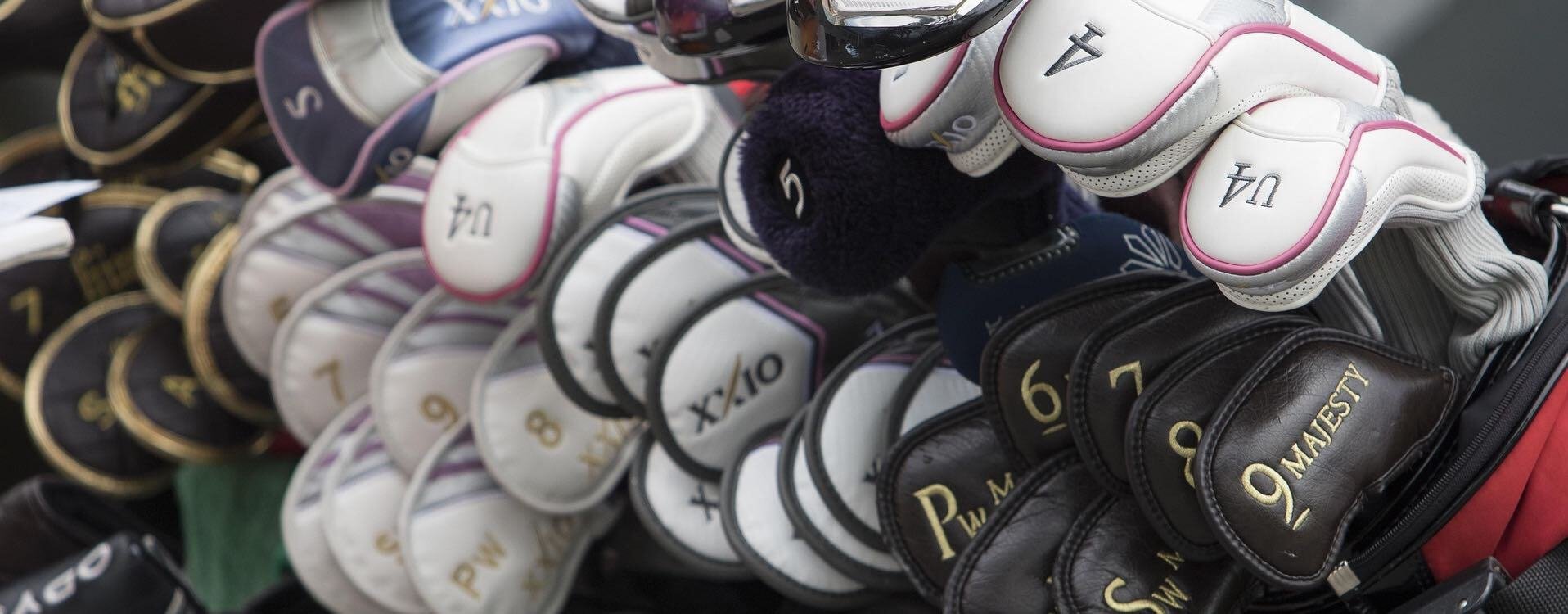
A solid beginner set usually includes a driver, a fairway wood or hybrid, a handful of irons (often 6-iron through pitching wedge), a sand wedge, and a putter. That lineup covers tee shots, approach shots, greenside play, and putting.
Hybrids deserve special attention. They are easier to hit off the ground than long irons because of their wider sole and lower center of gravity. Many starter sets now swap out the hard-to-hit 3-iron and 4-iron for a hybrid, and that trade-off helps beginners make solid contact more often.
Find the perfect hybrid below.
You don't need a lob wedge, a driving iron, or specialty clubs right away. Those additions make sense later, once you know where the gaps in your game actually are.
4. Choose Between Graphite and Steel Shafts
Graphite shafts weigh between 50 and 85 grams, while steel shafts weigh between 90 and 130 grams. That weight difference matters when you're still developing your swing mechanics.
Lighter graphite shafts help you generate more clubhead speed with less effort, which means more distance and a higher ball flight. They also absorb vibrations on mishits, so off-center strikes feel less jarring on your hands and wrists.
Steel shafts cost less and give you more feedback on each shot, which some players prefer. If you already have a naturally fast swing and want more precision, steel can work. For most new adult golfers with moderate swing speeds, graphite is the more forgiving starting point.
5. Get the Right Length and Flex
Club length affects your posture, swing plane, and ability to hit the center of the clubface. Most beginner golf club sets ship in standard lengths designed for golfers around 5'9" to 6'0". If you are significantly taller or shorter, look for sets that offer length options or plan to get a basic fitting.
Shaft flex refers to how much the shaft bends during your swing. Regular flex suits most adult beginners with moderate swing speeds. Senior or ladies flex options are available for players who swing more slowly. Stiff flex is usually more appropriate for experienced golfers who generate higher speeds.
Getting length and flex roughly right from the start helps you develop a consistent swing. You don't need a full custom fitting as a beginner, but avoiding a serious mismatch saves you from building bad habits early.
6. Avoid Common First-Set Buying Mistakes
One of the most frequent errors is buying a set labeled for intermediate or advanced players. "Players irons" with thin clubfaces and compact heads require precise strikes that most beginners can't make yet. Stick with game-improvement clubs that feature oversized heads and perimeter weighting.
Before you buy, check what is actually included. Some sets advertise a low price but leave out the bag, the putter, or key irons. Read the full spec list so you know what you're getting and what you'd need to add separately.
It's also worth resisting the urge to buy clubs just because a friend or online reviewer recommended a brand. The right set for an experienced golfer is rarely the right set for someone picking up the game for the first time.
7. Confirm the Set Is Worth Buying Before Checkout
Before you click "buy" or hand over your card, run through a quick checklist. Does the set include a driver, at least one fairway wood or hybrid, irons, a wedge, and a putter? Does it come with a bag? Are the shafts the right material and flex for your swing speed?
Check the return policy as well. Some retailers let you return clubs within 30 or 90 days, which gives you a chance to test them on the range. A good return window reduces the risk of being stuck with a set that doesn't suit you.
According to a 2026 report from the National Golf Foundation, more than three million Americans tried on-course golf for the first time each year from 2020 through 2025. With that many newcomers, the market for beginner-friendly equipment keeps growing.
If the set passes your checklist, you are ready to buy with confidence. You can always upgrade individual clubs down the road once you know your game better. Pairing your new set with a few essential accessories rounds out your gear without adding much to the total cost.
What Clubs Should Every Beginner Golfer Have in Their Bag?
Every beginner should carry a driver for tee shots, a fairway wood or hybrid for long approach shots, mid-irons (6 through 9) for mid-range shots, a pitching wedge and sand wedge for short game, and a putter. That covers the full range of distances you'll encounter on most courses.
Some beginners add a 5-iron, though a hybrid in that loft range is typically easier to hit. The rules of golf allow up to 14 clubs, but carrying 9 to 12 is plenty when you are starting out.
Focus on learning one or two clubs at a time. You'll build more consistency by practicing with a smaller set than by cycling through every club in the bag during each range session.
Does Upgrading From a Starter Set Actually Improve Your Game?
Upgrading makes a noticeable difference once your swing is consistent enough to benefit from specialized equipment. For most golfers, that point arrives after about a year of regular play and practice with solid training aids.
The clubs that typically get replaced first are the driver and the putter. Drivers offer the widest range of adjustability in modern golf, and a putter fitted to your stroke can cut strokes quickly. Irons usually stay in the bag longer because beginner-friendly irons remain useful well into your second season.
A smart approach is upgrading one or two clubs at a time rather than replacing the entire set at once. This keeps costs manageable and lets you test each new club against what you already own.
How Beginner Golf Etiquette Helps You Choose the Right Starter Set
Beginner Golf Etiquette is one of the best beginner-focused resources for choosing your first clubs, learning course basics, and building confidence before your first round. The Introduction to Golf Etiquette guide helps you understand course expectations, and the Beginner Golf Club Sets Buying Guide walks you through what to look for in a starter set and connects you with recommended options that fit a new golfer's budget.
Beyond equipment, the Golf Basics for Beginners resource hub covers etiquette, rules, and on-course behavior so you can step onto any course with confidence. The Beginner's Guide to Playing Golf book pairs well with your new clubs by giving you a structured plan for your first rounds.
If you want to skip the guesswork and start playing sooner, explore the full collection of guides at Beginner Golf Etiquette. Your first set is just the beginning.
FAQs About Choosing an Affordable First Golf Club Set
How many clubs does a beginner actually need?
Most beginners do well with 9 to 12 clubs. A driver, a hybrid, a few irons, a wedge, and a putter cover every shot you'll face on the course. Beginner Golf Etiquette recommends starting with this core lineup and adding clubs later as your skills develop.
Are used golf clubs a good option for beginners?
Used clubs can be a smart buy if you inspect them carefully. Look for clubs with minimal wear on the grooves and faces, and avoid anything with cracked shafts or rattling heads. A lightly used set from a previous model year often gives you more quality for less money.
Should I get fitted for my first set of golf clubs?
A full club fitting is usually not necessary for a true beginner. Getting the correct length and shaft flex is enough to start. Once your swing stabilizes, a proper fitting can help you fine-tune individual clubs. Beginner Golf Etiquette covers this process in its buying guide so you know when the timing is right.
What is the difference between a boxed set and building individual clubs?
A boxed set comes pre-packaged with matched clubs, often including a bag. Building individual clubs means selecting each one separately, which gives you more control but costs more and requires more knowledge. For first-time buyers, a boxed set simplifies the decision.
When should I start upgrading individual clubs?
Consider upgrading after you have played regularly for at least a season and your swing has become more consistent. Beginner Golf Etiquette suggests replacing the driver or putter first, since those two clubs tend to have the biggest impact on your score. Upgrade one club at a time so you can measure the difference each change makes.